





























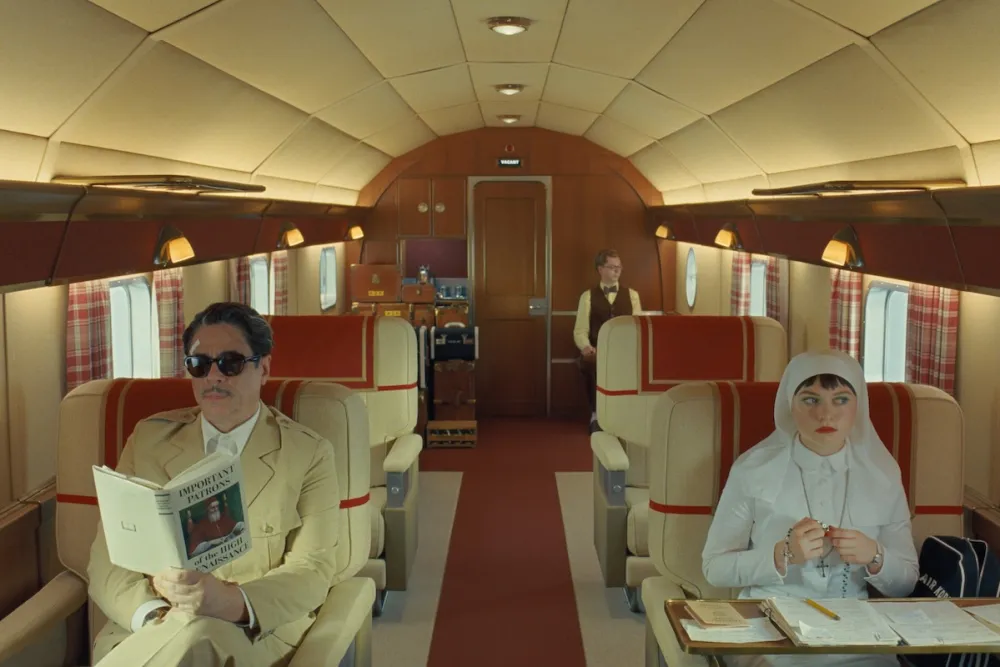
Wes Anderson’s The Phoenician Scheme is a kaleidoscopic caper that takes us through the director’s signature aesthetic with a mischievous vibe. This espionage black comedy feels like a love letter to Anderson’s own output, blending his style for meticulous visuals with a narrative that’s equal parts absurd and touching. Set in the fictional Modern Greater Independent Phoenicia, the film follows Zsa-zsa Korda (Benicio del Toro), a morally dubious tycoon navigating assassination attempts and a sinuous business deal, all while attempting to reconnect with his estranged daughter, Liesl (Mia Threapleton), a nun. With a huge ensemble cast and a script co-written with Roman Coppola, Anderson crafts a world that’s as enchanting as it is elusive.
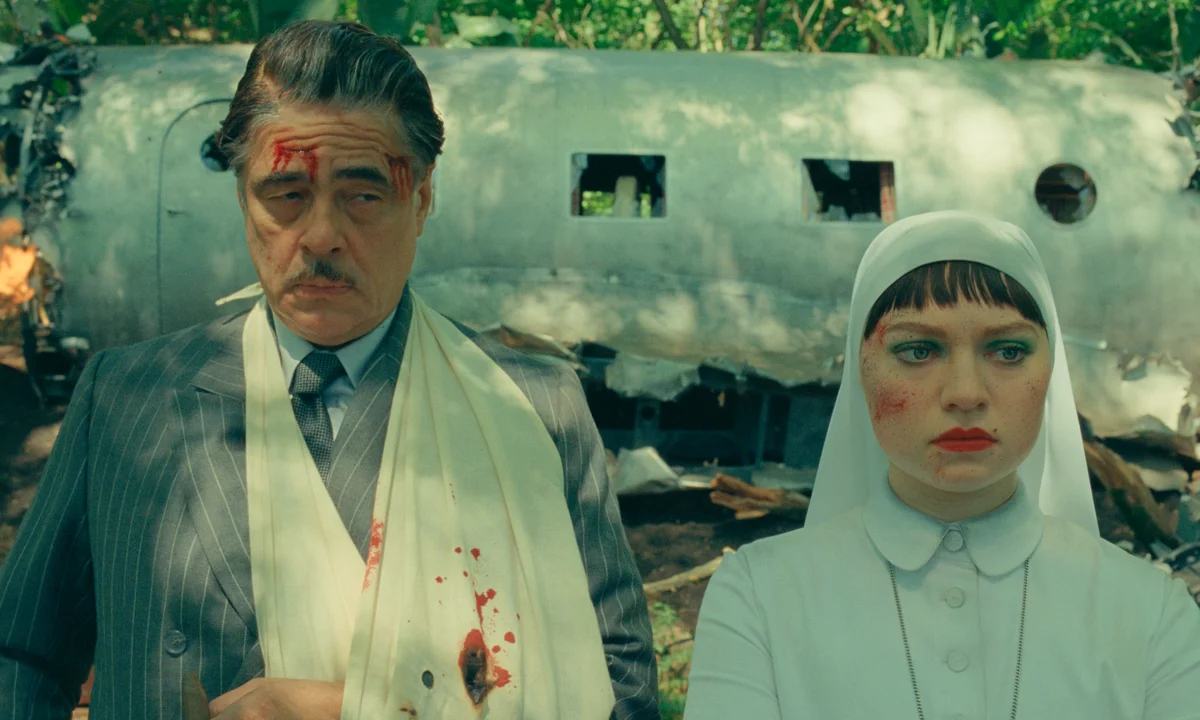
The film opens with a bang—literally—as Korda survives his sixth plane crash, a sequence that’s both hilarious and grotesque, setting the tone for Anderson’s blend of slapstick and comedic violence. Del Toro’s Korda is a magnetic antihero, a cigar-chomping commander, a man unburdened by ethics but haunted by mortality. His performance is a masterclass in deadpan delivery. Anderson peppers the narrative with biblical visions of Korda facing judgment in a black-and-white afterlife, where Bill Murray’s God and Willem Dafoe’s angelic attendant add a surreal, philosophical layer to the tycoon’s journey.
Mia Threapleton’s Liesl is the film’s beating heart, a revelation in her first major Hollywood role. Her pipe-smoking, sharp-tongued nun steals scenes with a commanding presence that belies her character’s demure exterior. The dynamic between Liesl and Korda drives the story, a father-daughter tale that oscillates between tender reconciliation and biting distrust, as Liesl suspects her father of murdering her mother. Anderson’s decision to center the plot on their relationship, reportedly reconfigured during production, pays off, offering an emotional anchor amid the film’s whirlwind of quirky business dealings and assassination attempts. Michael Cera, as the bumbling Norwegian tutor Bjorn, adds a delightful dose of awkward charm, his Swedish accent and lovestruck antics making him a standout in Anderson’s ensemble.
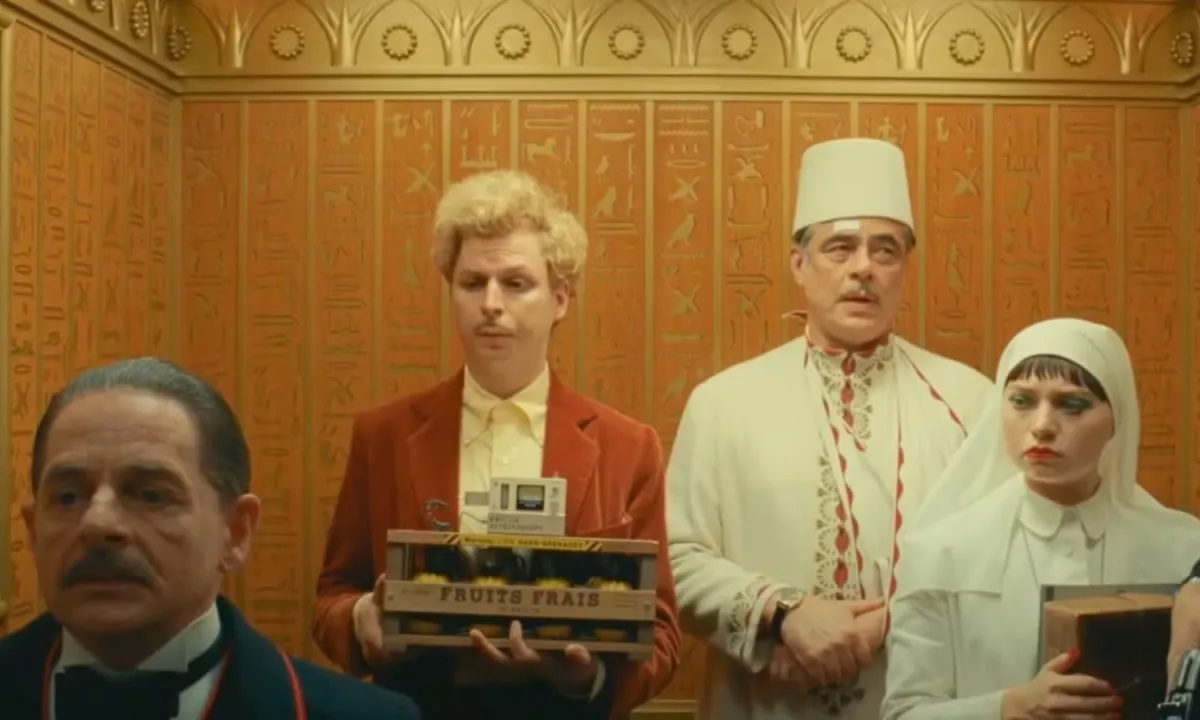
The ensemble cast, a hallmark of Anderson’s films, is both a strength and a distraction. Anderson’s knack for wrangling such talent is undeniable, but one wonders if a tighter focus on fewer characters might have sharpened the film’s emotional stakes. The Phoenician Scheme is a delight for Anderson devotees, offering enough visual splendor and witty charm to satisfy. It’s not his strongest work—lacking the emotional heft of The Royal Tenenbaums or the narrative propulsion of The Grand Budapest Hotel—but it’s far from a misfire. For every moment that feels like self-parody, there’s a spark of sincerity that keeps you invested.
The Phoenician Scheme screens at Luna Palace Cinemas from Thursday, May 29, 2025.
Email:neill@outloudculture.com