

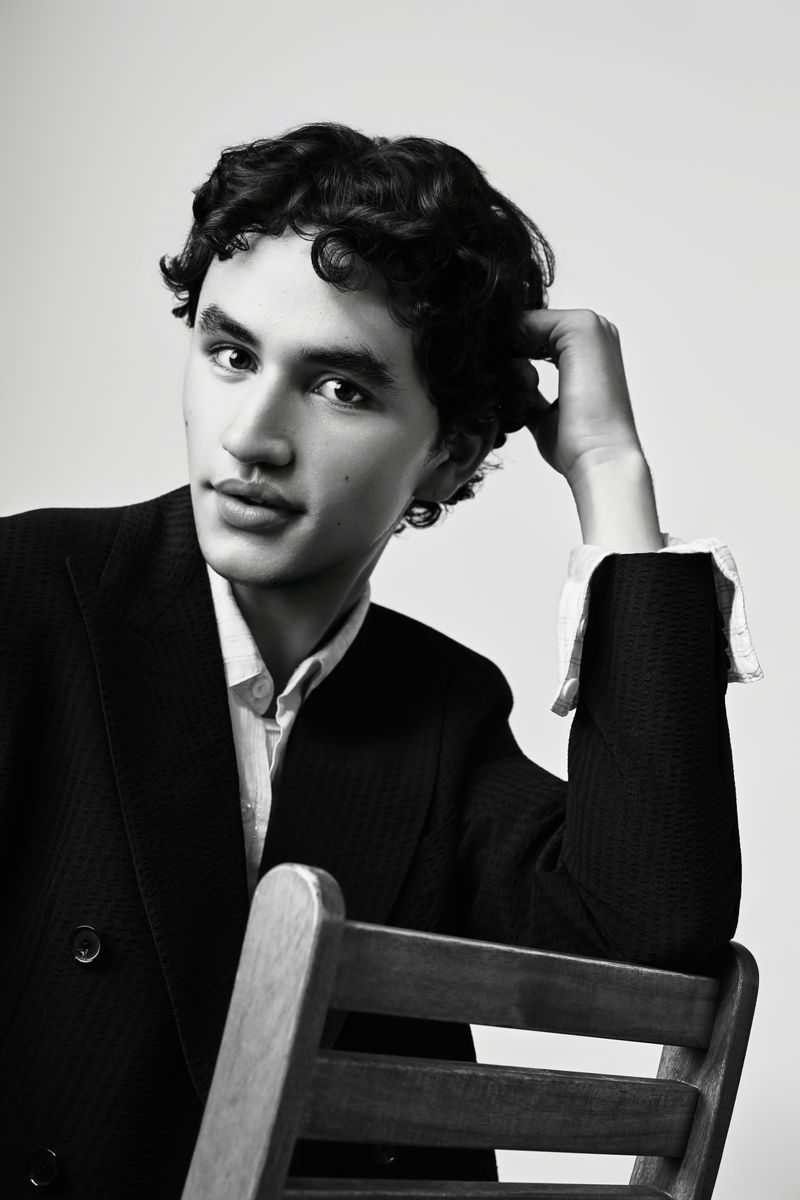
featuring @thegavingoudey
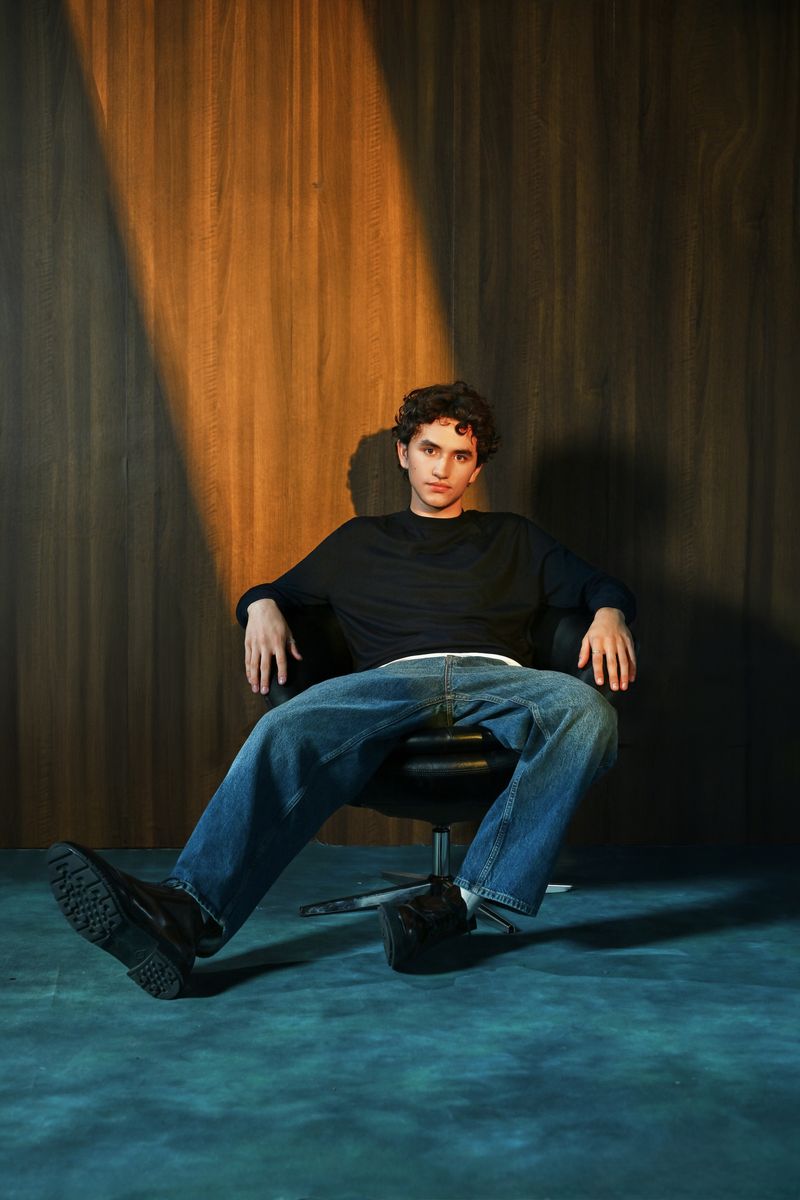
Gavin Goudey is an LA/NY-based actor of Latin American heritage who has trained extensively and continues to build his craft across film, television, voice-over, and theatre. After booking his first commercial in 2023, Gavin’s career quickly gained momentum — leading him to a lead role in James Gray’s Paper Tiger, opposite Scarlett Johansson, Miles Teller, and Adam Driver. Additional credits include a guest star on CBS’s FBI, a role in the independent feature The Good Dark, a starring role in the theatre production Skynight, and national commercials for Honda, Toyota, Cheerios, and Chegg. With a deep commitment to his craft and a passion for fashion, Gavin Goudey is a name to watch.
1. Your journey into acting began when you were just 13 years old, but things really started gaining momentum after booking your first commercial in 2023. Looking back, was there a particular moment when you realised acting could become more than just a passion and turn into a serious career?
I think I knew pretty early on that acting was what I wanted to do with my life. Once I started training, it just clicked for me. I loved it, and I couldn’t really imagine myself doing anything else. So it was never so much a question of whether I wanted to pursue it professionally, but rather how I was going to make that happen. Booking that first job was definitely a turning point, though. After spending so much time training and auditioning, it finally happened. I think it served as proof that this was actually attainable for me, and that was really exciting. It gave me a lot of confidence and reassurance that I’d made the right choice.
2. You’re set to appear in James Gray’s Paper Tiger alongside Scarlett Johansson, Miles Teller and Adam Driver. Given that you’re sharing the screen with some incredibly established actors, what was that experience like, and what did you learn from watching them work?
It was a dream come true, really. I’ve admired these actors for years, so getting to work alongside them was an incredible experience. Of course, there were some nerves going into it, especially since this was my first feature. I wasn’t entirely sure what to expect, but once I met everyone, all those nerves washed away. I learned so much from each of them, particularly because they all have such different approaches to the craft. It was almost like being thrown into the deep end and having to learn how to keep myself afloat. I was figuring out how to navigate a set of that scale, keep up with these seasoned performers, and trust my own instincts in the process. It was definitely a challenge, but they were all such kind, generous people, and they made it easy to feel comfortable and explore the work together.
3. Paper Tiger has already generated significant international attention, including its premiere at Cannes Film Festival. What can you tell us about your character, and how did you approach bringing that role to life without giving too much away?
I play Scott Pearl, the eldest son in the Pearl family. He’s getting ready to go off to college soon, and he’s at that age where he wants more independence from his parents. There’s a certain distance between him and his family because of expectations on his future. But when his father and uncle become entangled with the Russian mafia, everything changes, and he’s forced to confront what truly matters to him. I approached the role with a lot in mind. I knew this was a very personal story for James, one that drew heavily on his own childhood, and that Scott was inspired by his older brother. So I felt a responsibility to do that justice. Many of James’s previous films explore similar themes and draw on his own experiences, so I made a point of studying his filmography. James would also often share stories about his childhood and his own experiences, which were incredibly valuable. I was also living with family in Sheepshead Bay, Brooklyn, while we were filming. There’s such a rich history of Russian immigration in that area and nearby in Brighton Beach, and those neighborhoods are closely connected to the world of the film. I was fortunate to be staying with someone who knew a lot about the local history, and we’d walk around the neighborhood while he shared stories about it. All of that really helped me better understand the world of the story.
4. You have spoken about being inspired by actors like Joaquin Phoenix and Daniel Day-Lewis, both known for their extraordinary commitment to their characters. What is it about their approaches to acting that resonates with you, and how do you incorporate those influences into your own performances?
What I admire most about both of them is how completely they inhabit their characters. When I watch them, I don’t see a performance. I’m just watching another human being live, and I hold so much respect for actors who can achieve that. I’m still in the very early stages of my career, and I don’t think I’ve had the chance to explore that kind of transformation as deeply as I’d like. I’m still in this absorbing phase, where so much of the work is trial and error, discovering what works and what doesn’t for my own craft. I love studying actors and learning from their approaches, but I also recognize that my process is something I have to develop for myself. The results of their work speak for themselves, and that’s something I aspire to in my own career.
5. You’ve worked across film, television, theatre and national advertising campaigns for brands like Honda, Toyota and Cheerios. How important has it been for you to explore different formats of performance, and which environment challenges you the most as an actor?
I think it’s really important, especially when you’re starting out. Each of these mediums requires a different set of skills, although there’s certainly a lot of overlap. And I think any opportunity to gain experience and work with new people is valuable. I’d say Paper Tiger has challenged me the most so far. It was my first feature, and I was suddenly working on a much larger scale than anything I’d experienced before. There was so much to learn, not just about the craft, but about the filmmaking process and how to navigate a production like that. It pushed me in ways I hadn’t experienced before, and I gained so much from it.
6. Your guest appearance on CBS’s FBI and your work in independent film have given you exposure to quite different productions. Has there been a particular project or role so far that pushed you outside your comfort zone and changed the way you approach acting?
Both projects were great learning experiences for me. With FBI, I was stepping into this long-running procedural series for just a few days. It’s a well-oiled machine, and everyone knows exactly what they’re doing. So there was definitely a learning curve in figuring out how to come into that environment, find my footing, and do my job. And then with The Good Dark, an independent film directed by Hunter Lee Hughes, I was a day player working opposite Sherilyn Fenn. My scenes were actually the very first scenes filmed for the production, so I got to experience the beginning of that process, which was really special. I remember Sherilyn giving a speech about how filmmaking is a collaborative effort and that everyone there had an important role in bringing the film to life. There was a real sense of excitement among everyone involved. Both experiences pushed me in different ways and taught me how important it is to be adaptable.
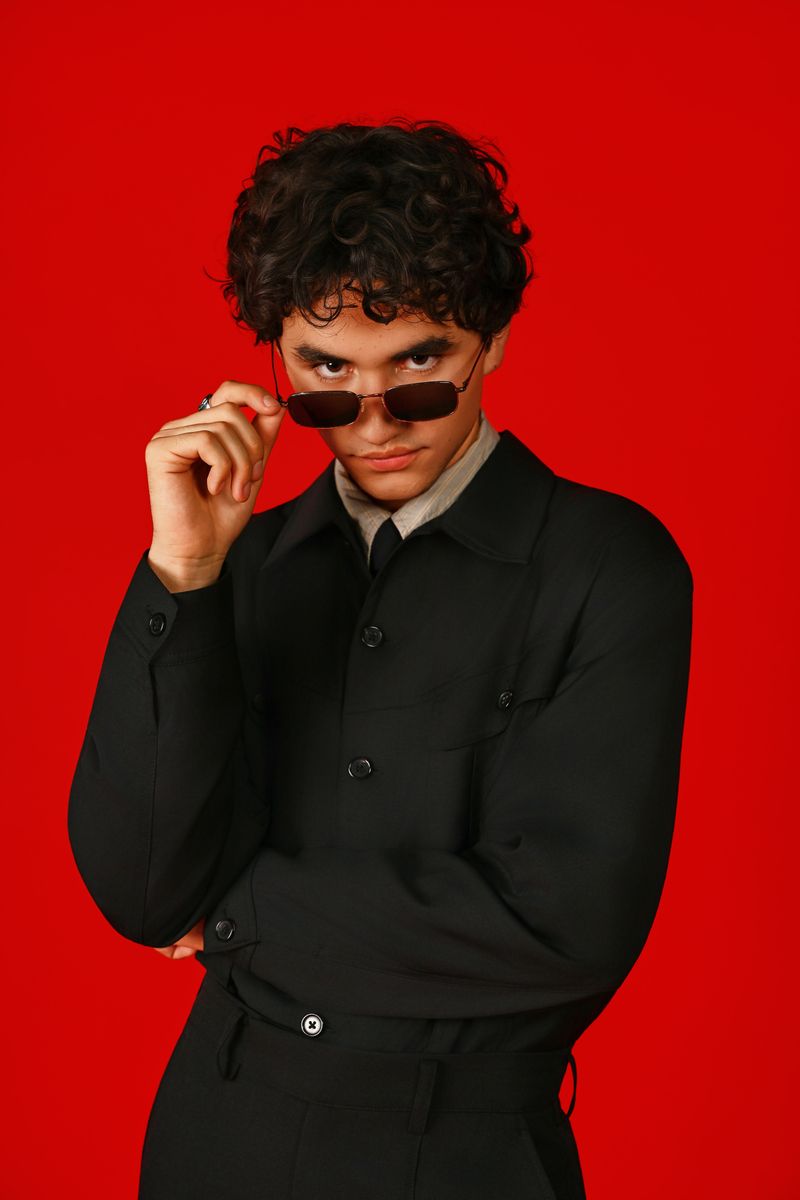
7. You have a genuine passion for fashion and seem very intentional about your personal aesthetic. Do you see fashion as another form of storytelling and self-expression, and are there any designers, brands or creative figures who influence your style?
Fashion absolutely is a form of storytelling and self-expression. There’s a real power that comes from what we wear, and I think that’s really cool. I draw inspiration from all sorts of places, especially different eras of fashion. I love the ’60s, ’70s, and ’80s, but there’s something to appreciate about every decade. As far as designers go, I’m really drawn to Yves Saint Laurent, Tom Ford’s era at Gucci, and Bottega Veneta, among others. But at the end of the day, I tend to gravitate toward whatever makes me feel most confident and comfortable. I also really admire Zendaya and the way she approaches her red-carpet fashion. I love how she draws inspiration from the project she’s promoting and creates looks that feel connected to the story while still reflecting her own personality, and she always kills it.
8. As someone of Latin American heritage and a member of the LGBTQ+ community, how important is representation to you within the entertainment industry? Are there particular stories or perspectives you’d love to see explored more through film and television?
Representation is incredibly important to me, not just in entertainment, but in every field. I understand how much it can mean to a kid to see themselves reflected in the stories they watch, and I think everyone deserves that opportunity. I’d love to see more stories that explore just how complex, diverse, and beautiful the queer community and Latin American cultures are. These are parts of my identity that I take great pride in, and there are so many different experiences and perspectives within these communities that deserve to be explored. I think what’s most important to me is that we’re portraying fully realized human beings. Our identities are important, and they shape so much of who we are, but they aren’t the entirety of who we are. I want to see characters whose identities are a natural part of their lives, rather than the only thing that defines them.
9. The entertainment industry is incredibly competitive, particularly for emerging actors trying to establish their identity in Hollywood. How do you balance the pressure to build a career with staying authentic to yourself and choosing projects that genuinely excite you?
I think it starts with understanding the nature of the business and finding ways to stay grounded through it all. I’m very fortunate to have such a supportive family, wonderful friends, and mentors who offer me a lot of guidance and perspective. I’m also not in any rush. Something I’ve told myself ever since I started acting is that it’s only a matter of time, because I know I’m not going to give up on this. I think you have to have that belief in yourself, especially in an industry where you’re constantly facing rejection. You learn not to take things too personally and to trust that things will work out. And I try to be thoughtful about the opportunities I pursue and the people I work with. Of course, the material is important, but so are the people you’re creating it with. I want to work on projects that excite me, with people who share that same enthusiasm for what we’re making.
10. With Paper Tiger representing such a significant milestone in your career, what does the next chapter look like for Gavin Goudey? Are there particular directors, actors, genres or creative opportunities you’d love to collaborate on, whether in front of the camera or beyond acting?
Paper Tiger has opened the door to so many wonderful opportunities, and I’m back at it, auditioning for projects I never imagined I’d be considered for this early in my career. It’s really exciting, and I’m looking forward to seeing what’s next. There are so many filmmakers I’d love to collaborate with. Paul Thomas Anderson and Chloé Zhao are two directors whose work I really admire. I’m also a huge fan of dramas, psychological thrillers, and horror films, so I’d love to explore more of those genres. And of course, one of my biggest goals is to lead a feature film someday. I’d also love to work on Broadway, and eventually explore writing and directing. I have quite a few ideas of my own, but that’s something I’d like to pursue further down the line. Right now, my focus is on acting, and I’m excited to see where it takes me.


Leave a Reply