

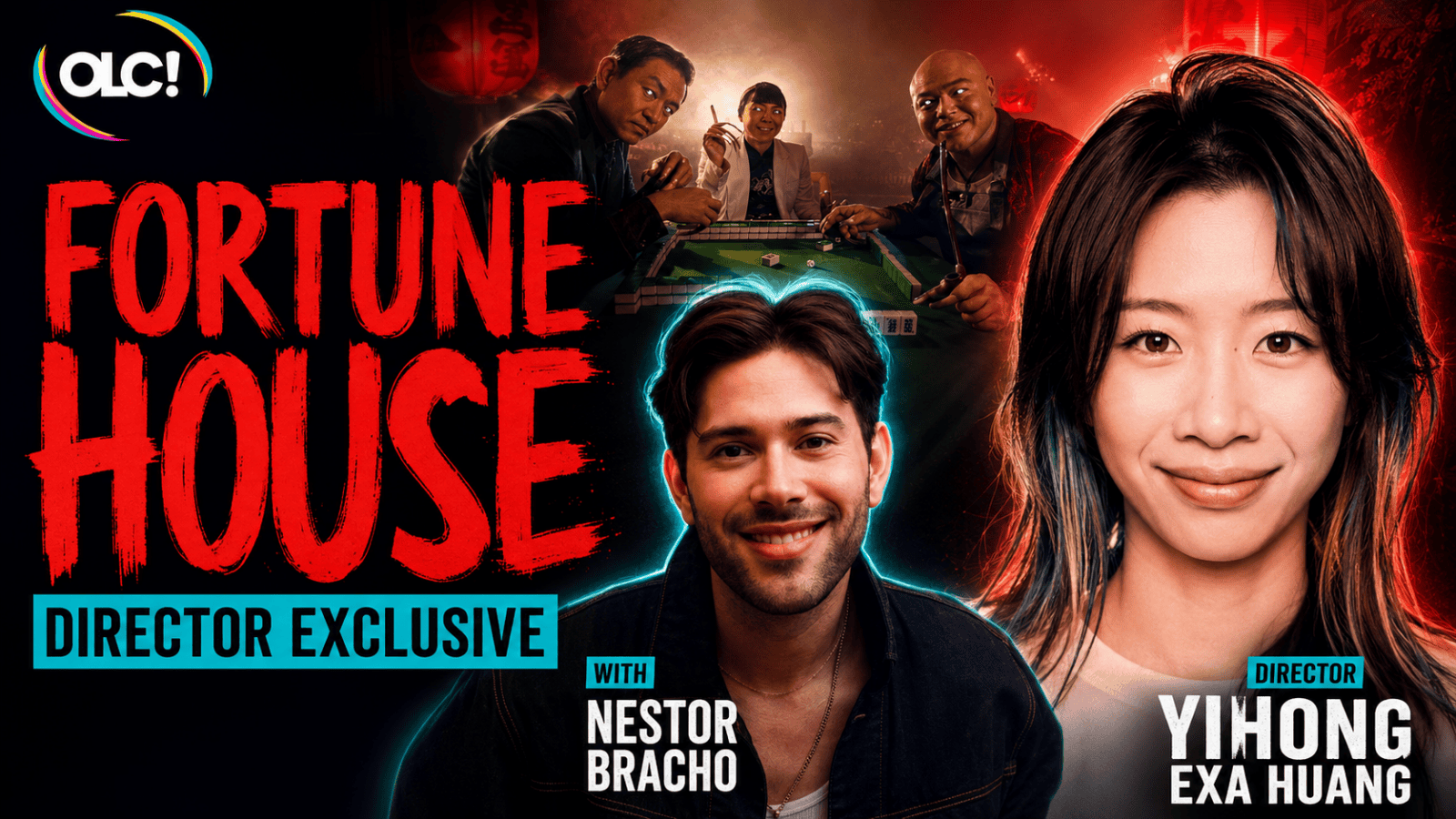
Featuring: @d1g1h1h @nestorbrachomusic @cinematicredpr
In the darkly comic short film, an undocumented delivery driver plays mahjong with demons for a green card. Huang tells OutLoud! Culture why the fantasy is really about power, survival and the price of belonging.
Interview conducted by Nestor Bracho
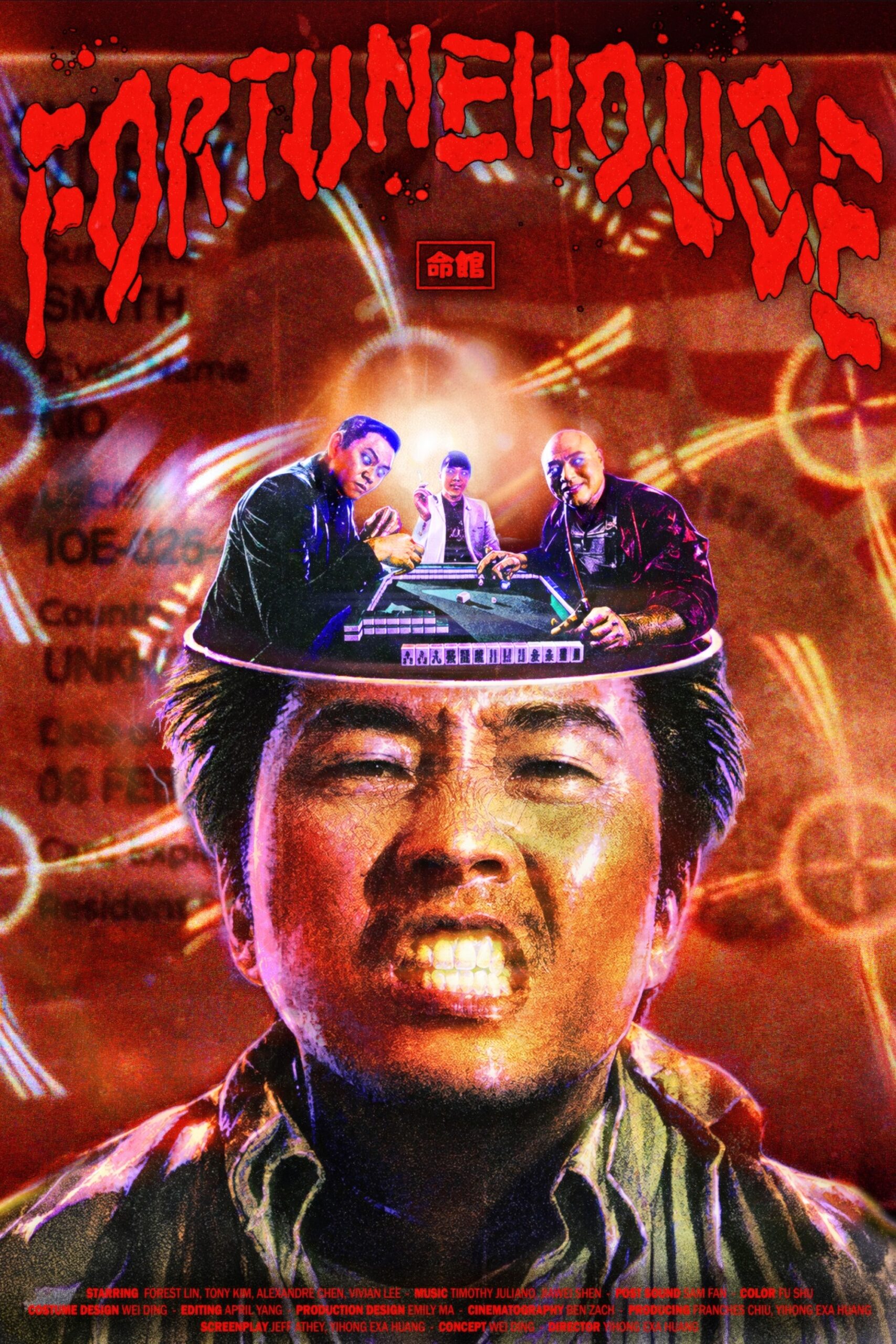
What would you put on the table for the right to stay?
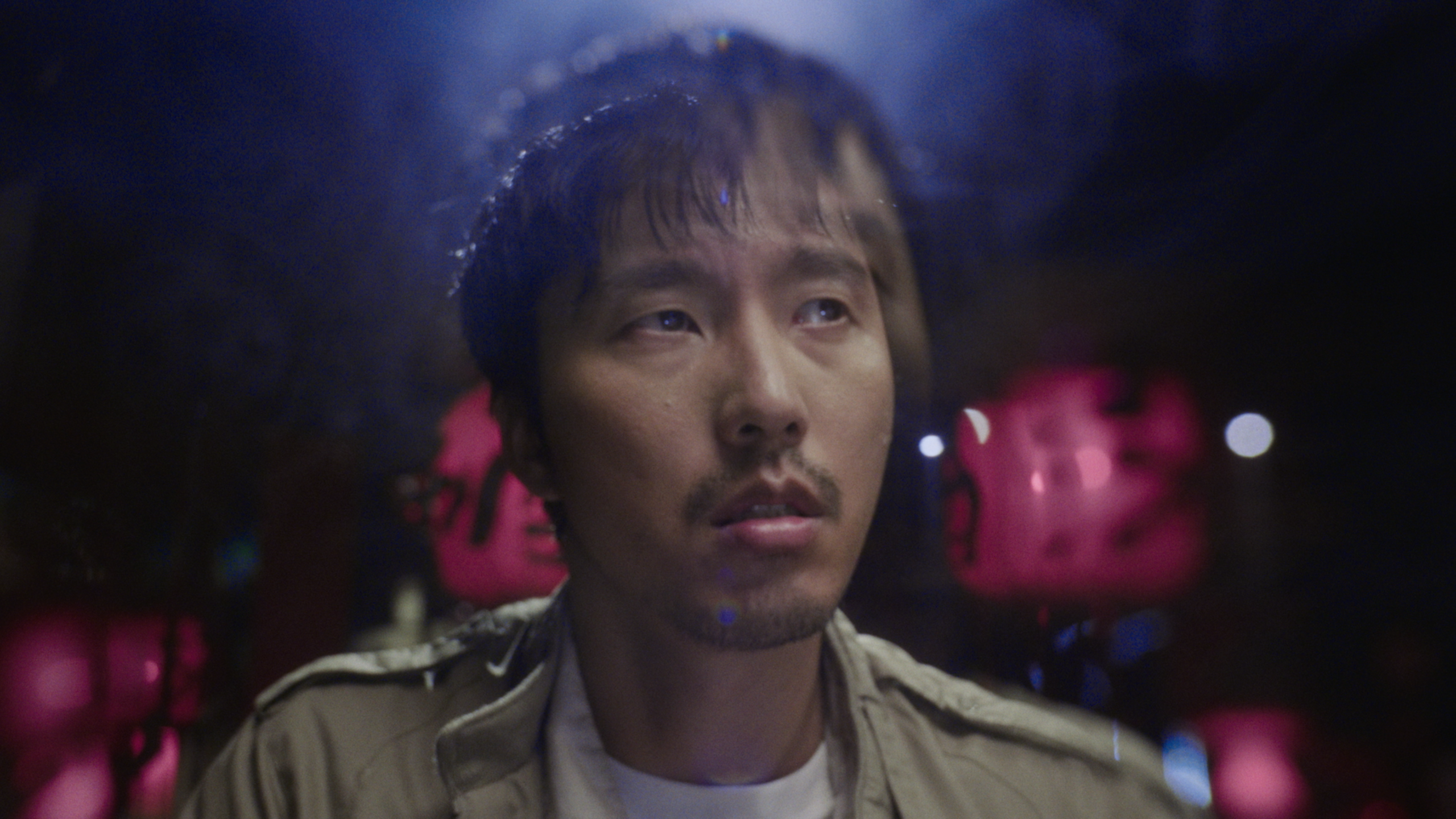
That question powers Fortune House, a magical-realist immigration fable in which Mo, an undocumented Chinese delivery driver, wanders into a Los Angeles restaurant and mahjong parlor run by three demons. Their offer sounds simple: win the game and receive a green card. But in a world where the rules, the stakes and even the value of a human life are set by someone else, a “fair chance” can be its own kind of trap.
Recorded ahead of the film’s Aug 7, 2026 world premiere screening at the Academy Award- and BAFTA-qualifying LA Shorts International Film Festival, OutLoud Culture host Nestor Bracho spoke with director Yihong Exa Huang about the personal history behind the film, the power of genre and the systems that make survival feel like a transaction.
Huang is a Los Angeles based graduate of the American Film Institute Conservatory and a former director and creative at VICE. She has also worked in development and acquisitions at Valhalla Entertainment. Her credits include I Hate Love, Just Another Day and Stranger in Paradise, which screened at queer film festivals in Berlin, Shanghai and London.
Horror, comedy and the immigrant experience
Huang does not reduce Fortune House to a single genre. The film moves among dark comedy, horror, fantasy and immigration drama because, for her, the emotional reality is equally difficult to contain.
The idea began with research into historical depictions of Asian immigrants in the United States. Huang and her collaborators encountered racist imagery that portrayed early Chinese immigrants as multi-armed, tentacled monsters arriving to steal local jobs. What began as an exploration of monstrosity expanded into a larger mythology in which demons and humans share the same uneasy world.
“We’re trying to depict how it feels when you suddenly get that feeling: ‘Oh, shit, I’m the minority here,’” Huang told Bracho. “That’s something we find hard to describe, and we’re trying to describe it in this short film.”
By making that feeling literal, Fortune House gives shape to the hyper-awareness many immigrants and minorities know well: the quick internal calculations about when to speak, whether to laugh, how one is being read and whether an ordinary interaction is truly safe.
Who controls the game?
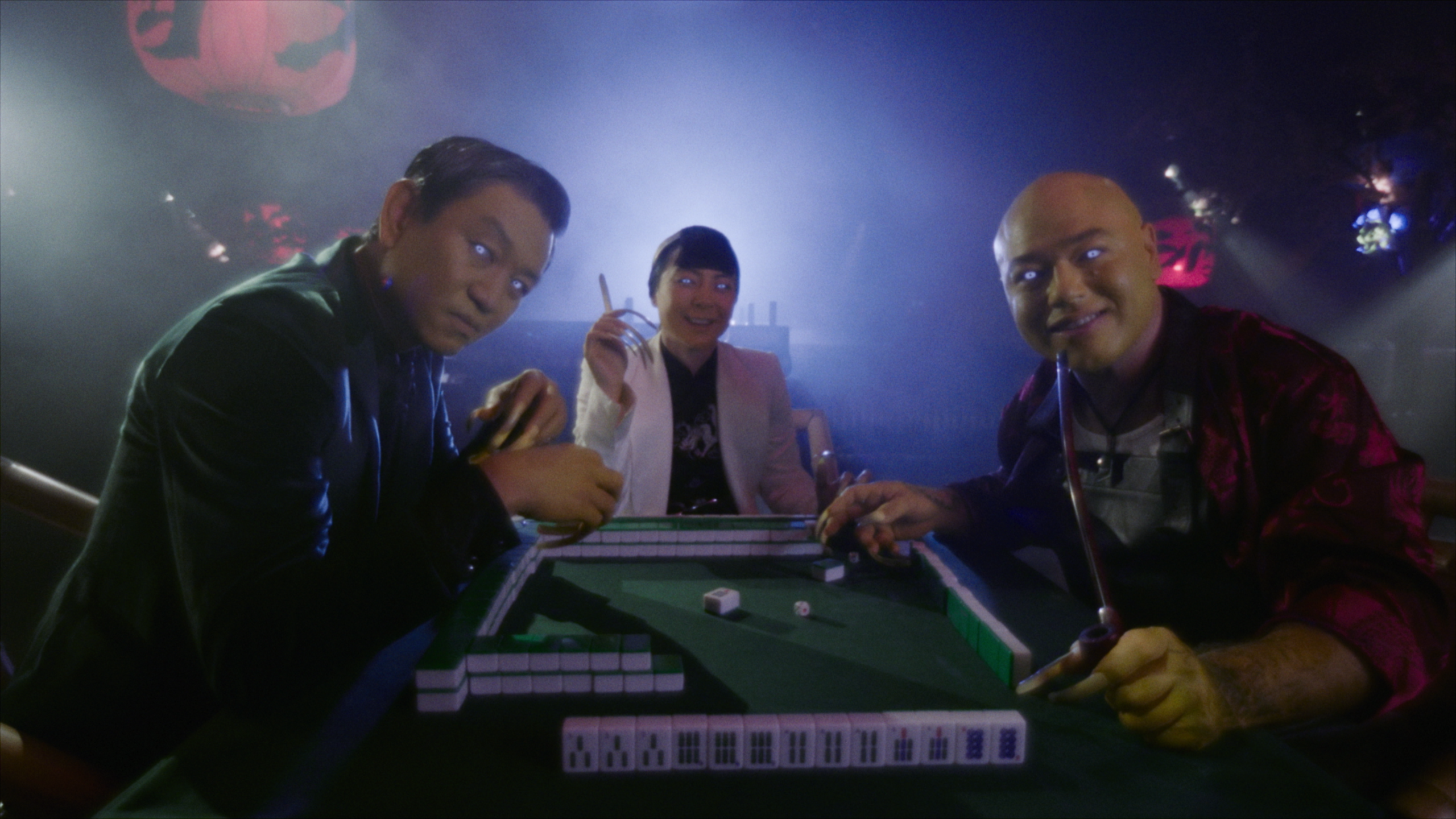
Bracho asked one of the interview’s sharpest questions: Who is actually controlling the game: the demons, the government, fate or capitalism?
Huang’s answer points to the film’s central tension. Mo arrives at the table with almost nothing the system recognizes as valuable. The demons define the game, while immigration policy has already forced him to play.
“The policy pushes him onto this table,” Huang explained. “But what we’re trying to do is show that he can finally control the game in the end. He also needs to give up something to earn his spot.”
That distinction matters. Fortune House is not simply about beating supernatural villains; it is about recognizing who designed the bargain in the first place. The demons may hold the tiles, but the true horror is a structure that turns legal status, safety and belonging into prizes that must be won.
A grandmother, a temple and the price of rebirth
The film’s spiritual economy grew from one of Huang’s most personal memories.
Born on an island in southeast China, Huang remembers her father becoming concerned when her grandmother’s pension began shrinking. The family followed her from her fishing village into the mountains, where they found an opulent temple rising above impoverished surroundings. Inside, families paid to inscribe the names of deceased relatives on memorial tablets, light lotus lamps and have monks chant sutras to clear karmic debts.
Huang’s grandmother had placed her own name among the tablets and paid for the chanting in advance. After a lifetime shaped by poverty and the necessity of slaughtering animals to survive, she believed she had accumulated sin and hoped to avoid hell by settling that debt before death.
For Huang, the image of a lavish temple collecting the desperate savings of villagers became impossible to forget. Years later, after moving abroad, she recognized a similar pattern in immigration systems: people with limited choices being asked to pay, perform or sacrifice for the possibility of a better next life.
“It’s more about who sets the rules and what kind of condition pushes you into a deal that you probably have to accept,” she said. Yet the film is not surrendering to that logic. “What this film is trying to tell is that we can get out of that. We can define our own destiny.”
Letting immigrant characters have an adventure
Huang is equally interested in what immigrant stories are allowed to look like onscreen. Too often, she said, those narratives are compressed into sadness and struggle. Fortune House makes room for fear and hardship, but also for wit, spectacle, strategy and hustle.
“We shouldn’t shrink their narrative into a certain kind of stereotype,” Huang said. “They are also human. They have their own adventure. They are having fun. They are hustling.”
That genre choice does more than make the film entertaining. It restores complexity to characters who are frequently asked to function as symbols of suffering. Mo is vulnerable, but he is not passive. He reads the room, learns the game and looks for a way to reclaim authorship over his own story.
For Bracho, an immigrant himself, that emotional core was immediately recognizable. His conversation with Huang repeatedly returned to the quiet questions immigrants carry: Has anyone like me done this before? Am I allowed to say what I want? Where is home when identity has been reshaped by every place I have lived?
A bigger demon world and a story about belonging
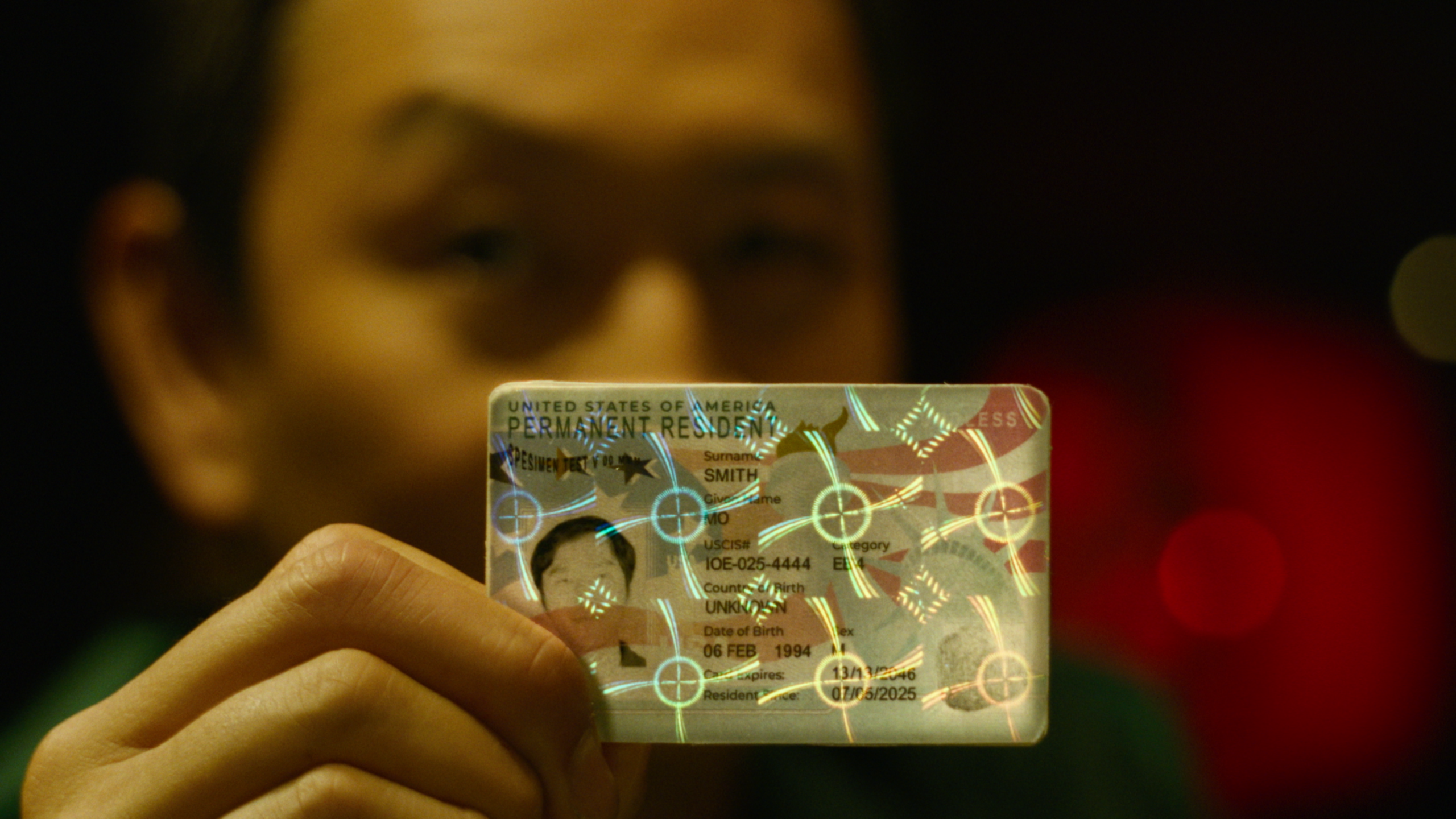
Huang grew up in Xiamen, studied in Taiwan, worked in Beijing and Shanghai, and now makes films in Los Angeles. Distance, she said, helped her understand her home city more clearly while also revealing the subtleties of living as a minority in the United States.
Fortune House may be only the beginning of that exploration. During the interview, Huang revealed that the creative team is developing a miniseries that would expand Mo’s world. In the larger story, he seeks help from a demon, makes a real deal and eventually forms a friendship with the beings he once feared.
“Demons are also immigrants stuck between hell and the human world,” Huang said. Mo may ultimately have to say goodbye to them, shifting the story from the immediate question of whether he can stay to the deeper question of where and with whom he can belong.
That evolution feels like the natural next move for Fortune House. Its cleverest trick is not that it turns immigration into a supernatural game; it is that the supernatural makes the real-world game easier to see. The film asks us to look past the spectacle of mahjong tiles and demons and notice the hands that set the rules, the price of admission and the people still fighting to claim a place at the table.
Fortune House is directed by Yihong Exa Huang and co-written by Huang and Jeff Athey. It is produced by Frances Chiu and Huang, with Wei Ding serving as executive producer. The cast includes Forest Lin, Tony Kim, Alexandre Chen, Vivian Lee and Joel Chang.




Leave a Reply