

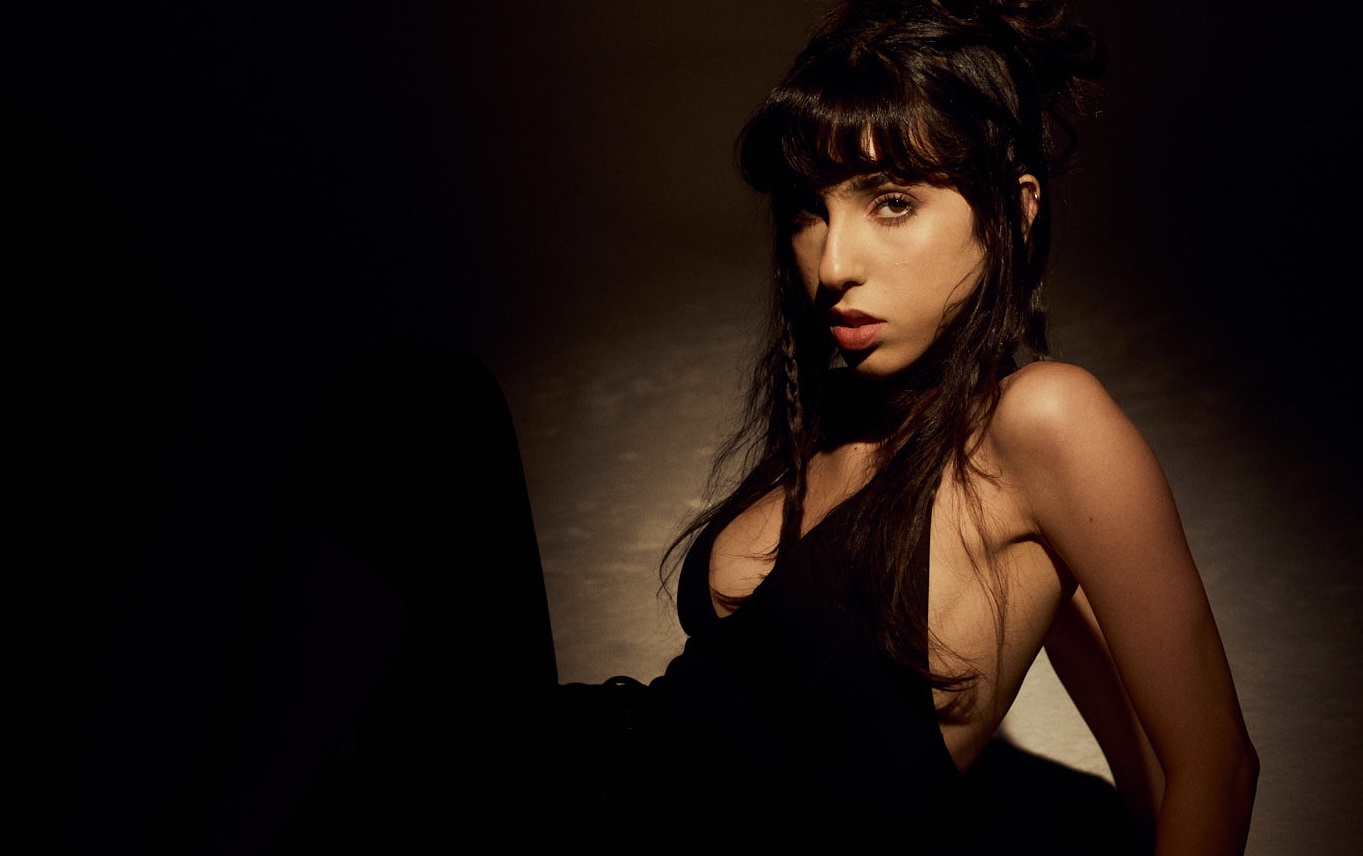
featuring @iamneska
Neska Rose is a 20-year-old multi-hyphenate artist who oozes creative intensity in the relentless pursuit of her muse. A captivating live performer, she seamlessly switches between guitar and piano, self-producing a sound entirely her own: bold, cinematic, and emotionally raw. Her music inhabits a quirky yet astute point of view, drawing inspiration from the gritty, editorial depth of Nick Cave, PJ Harvey, and Amy Winehouse, yet unabashed enough to embrace the vibrant energy of No Doubt with equal fervor. Her recent string of thought-burst singles are neither naive nor worldly, carried by a persistent persona that challenges the listener. Neska doesn’t care if you understand her lyrics on a casual listen, but she’d be happy to hear their meaning crept up on you from an angle.
In the studio, Neska is a prolific creator currently finalizing a brand-new, eleven-song album. Her distinct sonic identity has led to collaborations with multi-Grammy-winning producers David Greenbaum (Beck, U2, Paul McCartney) and Tim Anderson (Halsey, Twenty One Pilots). Alongside her independent projects, she has found substantial commercial success recording original music for the prominent music library Artlist, having already released three tracks this year with a steady stream of new material on the way. Beyond her main musical output, Neska has built a diverse resume as an accomplished actor and screen composer. She starred in Episode 3 of the Apple TV+ anthology series Extrapolations opposite David Schwimmer and Daveed Diggs, starred as Gertie in Nickelodeon’s Drama Club while composing original music for the show, and wrote comedy songs for the network’s sketch series Nick Shorts. Continuing to bridge her dramatic and musical talents, Neska is slated to take on her biggest screen project yet later this year, starring as the lead role in a psychological thriller filming in Australia. Melding raw screen talent with a relentless drive for musical self-production, she continues to carve out a singular space as a rising force in the indie landscape.
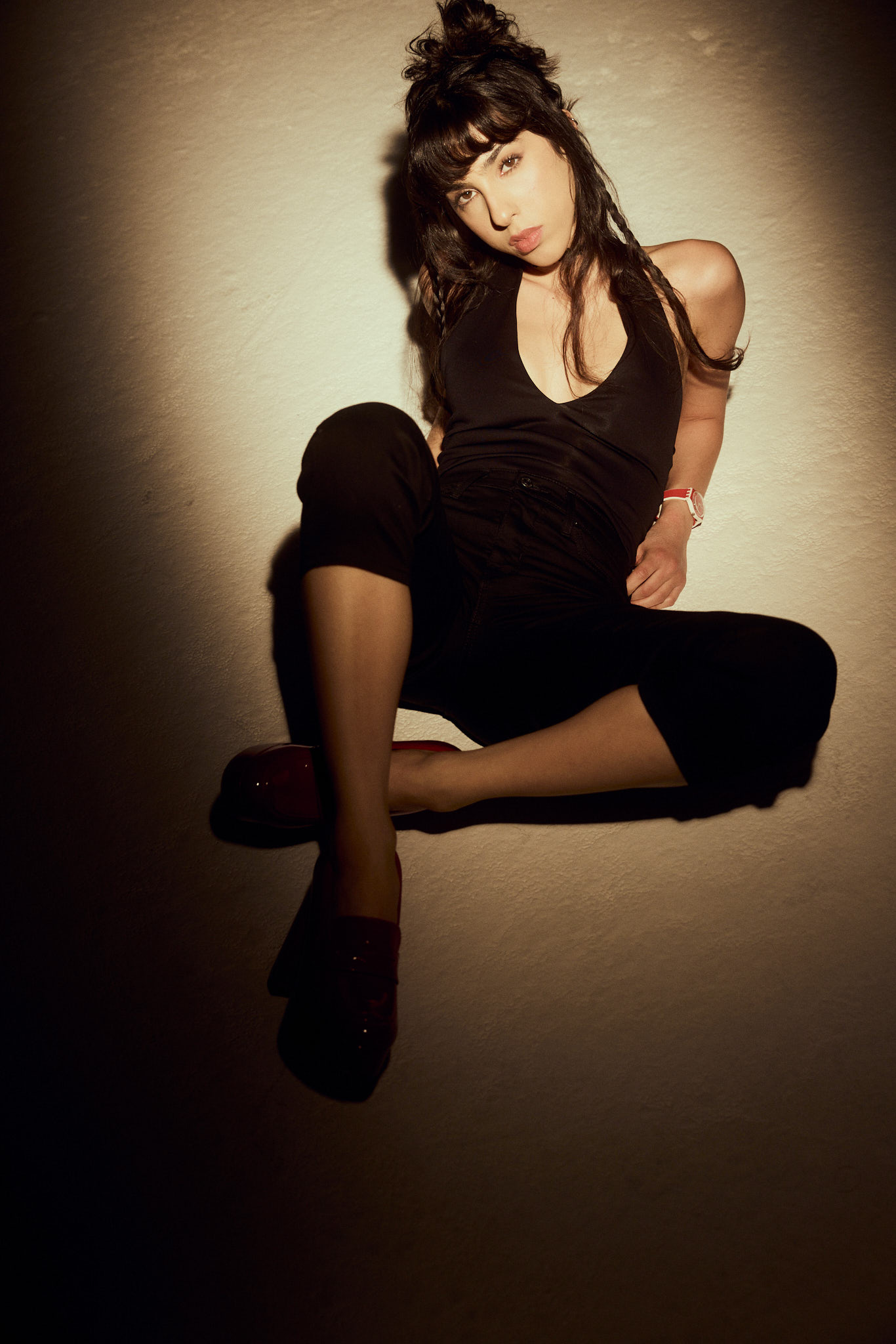
1. You are only 20, yet you already work as a singer, songwriter, producer, instrumentalist, actress, and screen composer. Do those different forms of creation feel like extensions of the same artistic identity, or does each one reveal a different version of who you are?
It really does feel like it’s not even an artistic identity, it’s just me, you know? And I feel like through these different aspects of art, I kind of connect to the same higher power. I always viewed making and creating and storytelling as like a higher form of connecting to a higher force. And through all these different endeavors, I reach that state of connecting to maybe it’s a higher chakra, I don’t know what it is- but yeah, it comes from the same place. And I guess it brings out different things about me. I mean, as a composer, I kind of put on a different hat than being a performer, obviously, but it all ties to one another in some form.
2. Something is fascinating about the idea that you do not need listeners to immediately understand your lyrics, but enjoy it when their meaning reaches them later and almost unexpectedly. What can a song achieve by leaving some answers for the listener to discover on their own?
I think that’s the greatest thing art can do: it’s not about preaching to the choir or having one person deliver one message and not leaving room for interpretation. I think art is a timeless thing between the listener and the creator, between the artist and the consumer. Once you let it out and release it into the world, it’s really not yours anymore; it’s the world’s. And it could have a different impact on every person in a way the creator will never understand. Even I sometimes hear people telling me that they listen to my song on their way to work, and it helps them get through their nine-to-five, and I never thought about that when I was creating it- how it could impact people on a daily basis. So that’s what I want to achieve with my art; I don’t just want people to understand it immediately and leave it alone. I want to make them question things in their daily life and hopefully help them.
3. You self-produce your music and seem to have a very specific sense of how you want to sound. When collaborating with producers such as David Greenbaum, how do you remain open to their ideas while protecting what makes a song unmistakably Neska Rose?
Throughout my creative life, I’ve had many sessions and collaborative evenings that made me grow as an artist. I think every artist should experience collaborating because it basically shows your strengths and weaknesses. I’ve released many songs with David, and I feel like he helped me a lot in terms of refining my work, just getting there until we have a great final product. I mean, obviously we found a lot of similarities in each other as artists, but he also helped me grow in terms of, I should rethink the structure; I should sing this verse again. I mean, really striving for the best possible product. And I feel like the stuff we did together, it was me because I created songs that were about what happened to me at the time, and he’s just, you know, he received that, and he helped me. He challenged me, and yeah, it just worked out that way. That’s why we kept working together.
4. Your upcoming album contains eleven songs. When you look at them as a complete body of work, is there a personal or artistic transformation between the Neska who began writing those songs and the one now finishing the album?
I’m now putting together all the songs on this album. Still, I definitely feel like there are lessons in there that I just learned as Neska in the real world, not even in the artistic world that obviously I put into my writing, because everything I go through in my life I put into my songs. And also, you know, age-wise, these songs kind of started when I was 18 until now, 20, and I feel like those are really monumental years in a young person’s life. I’m still learning how to be me in the adult world, so I’ve definitely grown.
5. You have composed original music for projects you were also acting in, including Drama Club. When you are portraying a character and creating music for the same world, do those roles influence each other? Does being a composer change the way you hear or interpret a scene?
Yeah, creating music for whichever film I’m in or TV show is very different than the Neska music because I am the character. When I composed for Gertie, I put myself in Gertie’s shoes and thought about what kind of melodies she would want to go through. And even for Nickelodeon, that was comedy, so you have to put your comedy hat on, and writing comedy is really like solving a math equation. I feel like my songs are more stream-of-consciousness, like a spiritual thing. Obviously, you refine it, but that’s kind of the core, so I feel like for projects, I approach it differently.
6. Young artists are often pressured to define themselves quickly and maintain a recognizable image. You seem to be doing almost the opposite, exploring different sounds, instruments, and creative languages. What part of yourself do you most want to preserve as your career and audience continue to grow?
I always feel like I have initial fire for everything. That’s kind of why I explore different genres and instruments because art just gets me excited. That’s why, as a listener, as a consumer, I don’t even stick to one genre. I wouldn’t say I just like listening to pop or rap. I really go through phases because I just get excited about being a music listener, which is why I make art in the first place. Artists just get me so excited that I want to be part of their team, part of their family. And that’s what I want to maintain as an artist: my love for it. Not even my love for creating it, just my love for music and creation, because I feel like if I don’t have that, I won’t want to make more of my own.
X,
Neska Rose
- Email: neill@outloudculture.com
- Socials: @neill.frazer
- @neill.outloud
Leave a Reply