

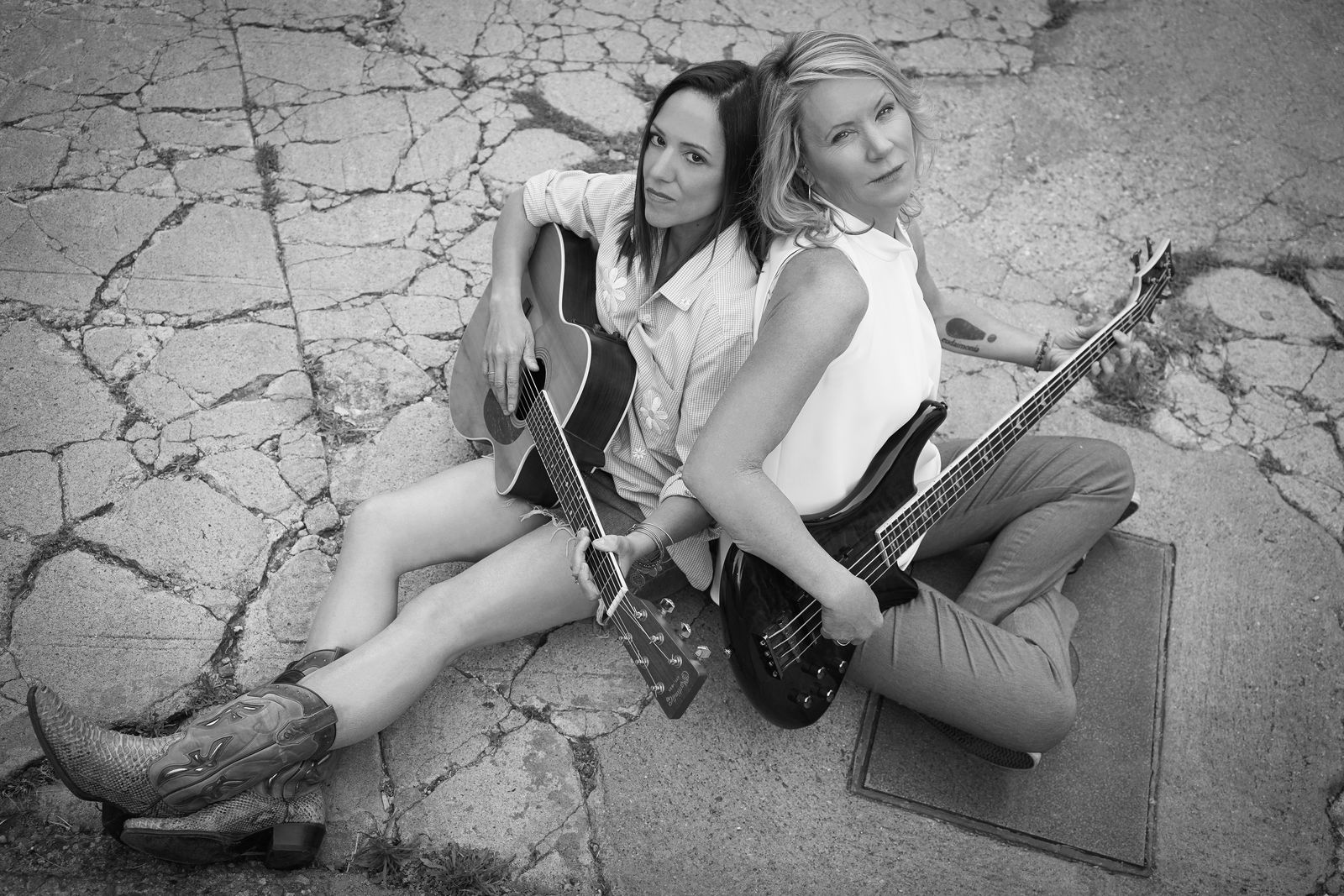
You’ve been partners in life and music for 19 years now—how has that unique dynamic
shaped Whiskey Flower’s sound and songwriting, especially when it comes to blending
personal authenticity with broader storytelling?
H: Well….there’s a lot of couple’s therapy along with bickering in rehearsals but we always
fight for the best sound, the best arrangement, and what’s best for the song. Because we
know each other so deeply, we can push a song past autobiography into something more
universal.
J: Haha, that’s true. And yes, I think that trust we have built over 19 years of living together
as spouses and working through sh*t allows us to be direct with each other. There’s no
walking on eggshells here. I think it’s why we can move through “creative difference” lol,
faster and without the drama. I also think it’s why the final product is so authentic.
Your music often carries a fierce, resilient energy with themes of triumph over
turbulence. What inspired the title and message behind your debut EP Righteous
Indignation, and how has your perspective on those social/political themes evolved since
2023?
J: The song Righteous Indignation was actually the very first song I wrote for Whiskey
Flower. We were emerging from the pandemic and I was really disappointed with both
political extremes and everyone’s inability to move even 2 inches toward the middle. What’s
shifted since then is less the feeling and more how I hold it. There’s less fire-for-the-sake-of-fire now, and more clarity about where my energy actually belongs.
H:Ya, there was such a division in our country. A lot of hate and people being siloed in their
own thoughts and beliefs. For me, this was very sad and what’s even sadder is I feel not
much has changed. I think the sadness has matured into something more resolved—less
shock at the division, more commitment to staying human inside it.
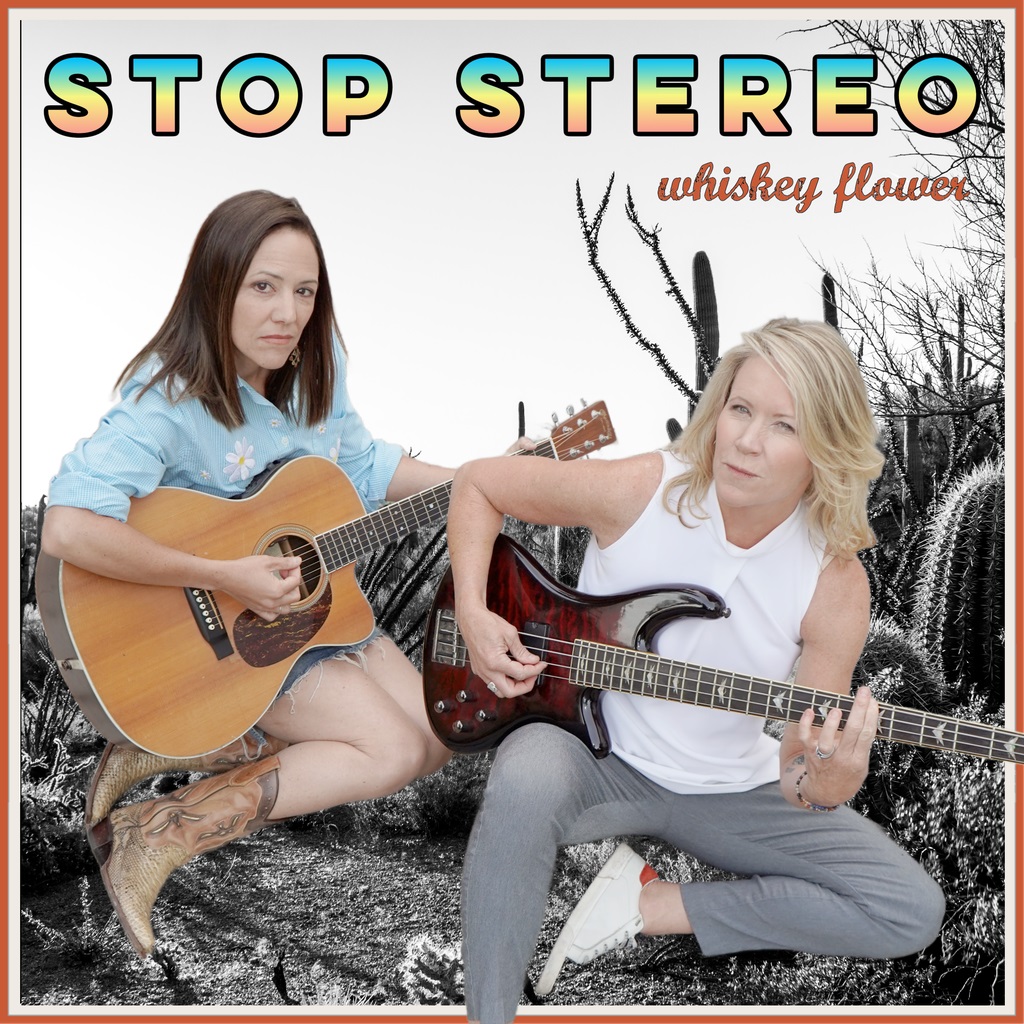
“Stop Stereo” is described as a desert-punk queer anthem that pushes back against
stereotypes and conformity. Can you walk us through the song’s origins—what personal or
cultural experiences sparked it, and how does it fit as the first taste of Double Yellow
Lines?
J: This was one of those songs that came through me rather than from me. Does that make
sense? The melody and the lyrics burst out of me all at once. I believe I was the right conduit because of the path of conformity I lived for so long earlier in my life and my career and the evolution I was starting to experience as a person who is just over it—for me and everyone else. It felt like the right first taste of Double Yellow Lines because the whole EP lives at the intersection between who you were told to be and who you actually are.
H: I don’t even know where to start! I feel like with my profession as a licensed naturopathic doctor on top of being born queer, I have experienced so much intense discrimination that has led me to try to hide my true self and morph into what I think people will accept me as. The difference now—and what this song symbolizes for me musically and personally—is that I’m done with conforming. I am good enough as me and hope for others to find this within themselves as well.
Having a Grammy-winner like John Would (known for Fiona Apple’s Fetch the Bolt
Cutters) produce tracks for your upcoming EP must have been exciting. What was the
collaboration like, and how did it influence the sound of “Stop Stereo” or the EP overall?
J: Oh man! John is—how do I even begin to describe working with him? He’s so chill and laid back, not to mention crazy freaking talented! His studio is like a musician’s Nirvana, a safe space where you aren’t afraid to try things and perfection truly is the enemy. It’s all about the vibe. He is the one who convinced us to record “Stop Stereo” live. What you hear on the track was all done together in a single take.
H: He is amazing! There’s this one part of the bridge section in “Stop Stereo” where during
the recording session, he said, “Try this.” It was a series of notes in a walk down that made
it so much cooler than what I was doing. I love him.
Eight of your songs, including the Emmy-considered “Something Better Than This,”
were featured in Season 1 of Middlehood on Amazon Prime Video. How did that
opportunity come about, and what was it like seeing your music integrated into a series
about midlife reinvention and family?
J: That was a crazy story! Our EP was dropping in a couple of days and our friend, Catherine, shared the post on her Facebook page of all places. Turns out, Michele Palermo (writer/creator/producer of Middlehood) was up after midnight that night, struggling with music for her first season. Nothing she had found was quite “it” yet. She saw Catherine’s post, listened to the EP, and the rest is history. “Something Better Than This” is kind of its own wild story. After Michele had licensed a bunch of songs, she sent us the rough cut of the first season and there was still one scene with filler music in it. I was so taken by the story and the characters, I ended up writing the song the next morning and sharing it with Michele, who used it in that scene.
H: It was surreal. I embarrassingly watch a lot of TV and there’s obviously music everywhere. I was so blown away, not only by the series, “Middlehood” and it’s distinct storytelling and message, but also by hearing ourselves! The themes of reinvention, longing, and starting over felt incredibly familiar to us, which is probably why the music slid into that world so naturally.
Holly, you’re on Time Magazine’s Alt 100 List—congrats on that recognition! How has
that platform or visibility impacted your work with Whiskey Flower, particularly in
amplifying queer voices in Americana-Rock?
H: Big HA! We are still hoping that it does?? LOL. In all seriousness, if that visibility does
anything, I hope it quietly affirms that queer voices belong in every space—including roots
and Americana music—without having to explain or justify themselves.
Julie, you’ve had a journey from earlier projects like Dimestore Halo and releases on
Hyena Records and Lonesome Day Records to forming Whiskey Flower. What drew you to
shift toward this duo format with Holly, and how has it felt liberating or challenging?
J: To be honest, I got dropped from my labels, the band broke up, and my manager and I
parted ways. It was a really low time for me—so low that I walked away from music
altogether for a while. For a decade, Holly and I played around for fun in different band
configurations—we even went on a couple of small tours—but nothing really stuck.
Whiskey Flower formed during the pandemic, when a friend and her neighbors were all
craving live music and asked us to come play on their driveway for a distanced yard party. It
was pure joy playing live music during that time! The smiles we brought to people’s
faces…the wiggles we brought to their hips. It reignited something in me and in Holly and
that something grew into Whiskey Flower.
Your live shows are known for tight harmonies, electrifying energy, and that “lived-in
authenticity.” What’s a favorite memory from performing as a duo (or full band with guests
like Kristen Gleeson-Prata on drums), and how do you keep that raw connection with
audiences?
H: There is a certain song that Julie wrote, actually for the series, “Middlehood”—it’s called
“Something Better Than This.” We start out acapella with “Ooooos” in tight harmony. I’m
always so surprised at how quiet people get and stay during that part. Pindrop.
J: Ya, I’m always surprised too. It almost threw me off the first time! In general, Holly and I
have fun together on stage whether it’s a duo show or a full band show. We love playing with KGP (Kristen) on drums! She is such a force and a total pro. I think Holly’s personality also adds to that “lived-in authenticity” because I just never know what she might do or say. She’s a bit of a wild card and I’m the control freak.
As an openly queer duo, how do you navigate representation in the Americana/Roots
music scene, which hasn’t always been the most inclusive? What message do you hope
“Stop Stereo” and your overall catalog sends to the LGBTQ+ community and allies?
J: Having started in the Americana/Roots genre in my solo career, I can attest to a lack of
inclusivity being a real thing at one time. I was told that I needed to “keep people guessing”
and “be a mystery.” I was even told not to wear my wedding ring! It was a different time. The message we hope comes through—especially to queer listeners—is that you don’t have to hide or shrink to belong here.
H: I guess at this point, I am so over labels. People are people. I guess Depeche Mode had it right. And, I really wish we could all just realize that and love each other. If our music gives someone permission to take up space exactly as they are, then it’s doing its job.
You’ve got merch, vinyl pre-orders, and local Santa Fe gigs in the mix alongside bigger
releases. What’s the balance like between staying grounded in local/live roots and building
toward the full Double Yellow Lines EP release?
H: For me, there’s really no “balance.” It’s about continuing to do what you love, get better at your craft, and grow where you can.
J: I agree. The size of the venue or the prestige of the gig matters little to me anymore. It’s
about connection.
“Stop Stereo” confronts being boxed in—personally, culturally, and sonically. In a world
that often demands conformity, how do you two stay true to your unapologetic style, both
in music and in life?
J: Candidly, it’s a lot easier for me to be unapologetic with music than it is in life. Life is still a work in progress. Things are shifting though and I know that’s being reflected in our music.
H: It’s funny, I started out as a guitar player and was self-taught on bass when Julie needed a bass player about a decade ago. I thought, “2 less strings—what can go wrong?” But seriously, I used to be insecure about not being classically trained but I’ve learned to embrace my own style and just stick to it. I’ve learned that confidence doesn’t come from fitting a mold. It comes from committing to your own lane and standing there.
Looking ahead, what’s next after “Stop Stereo” drops on February 27? Any hints about
the rest of Double Yellow Lines, future live plans, or how fans can support Whiskey Flower
as you kick up dust and keep breaking molds?
H: We are ready for ANYTHING! I would love to open up and support a bigger act on the
road and just have a blast playing music and hopefully making people happy.
J: I echo Holly for sure! There’s more music coming from Double Yellow Lines, more live
shows, and a real desire to keep building community around the songs as they’re released.
So, Brandi Carlile, if you are reading this—Whiskey Flower is available. ��
https://www.whiskeyflowerband.com
https://www.instagram.com/whiskeyflowerband
- Email: neill@outloudculture.com
- Socials: @frazer.live
- @neill.outloud