










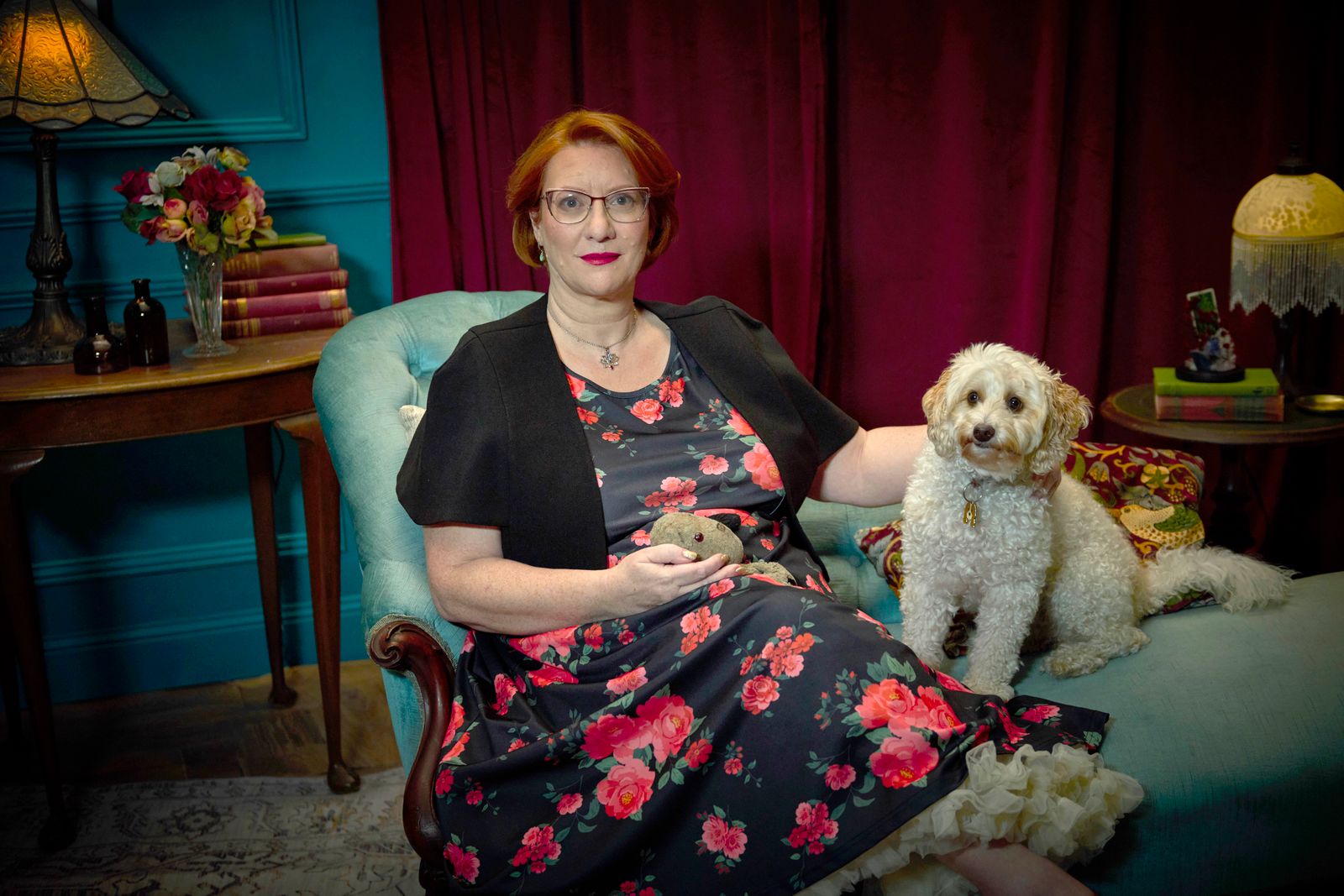
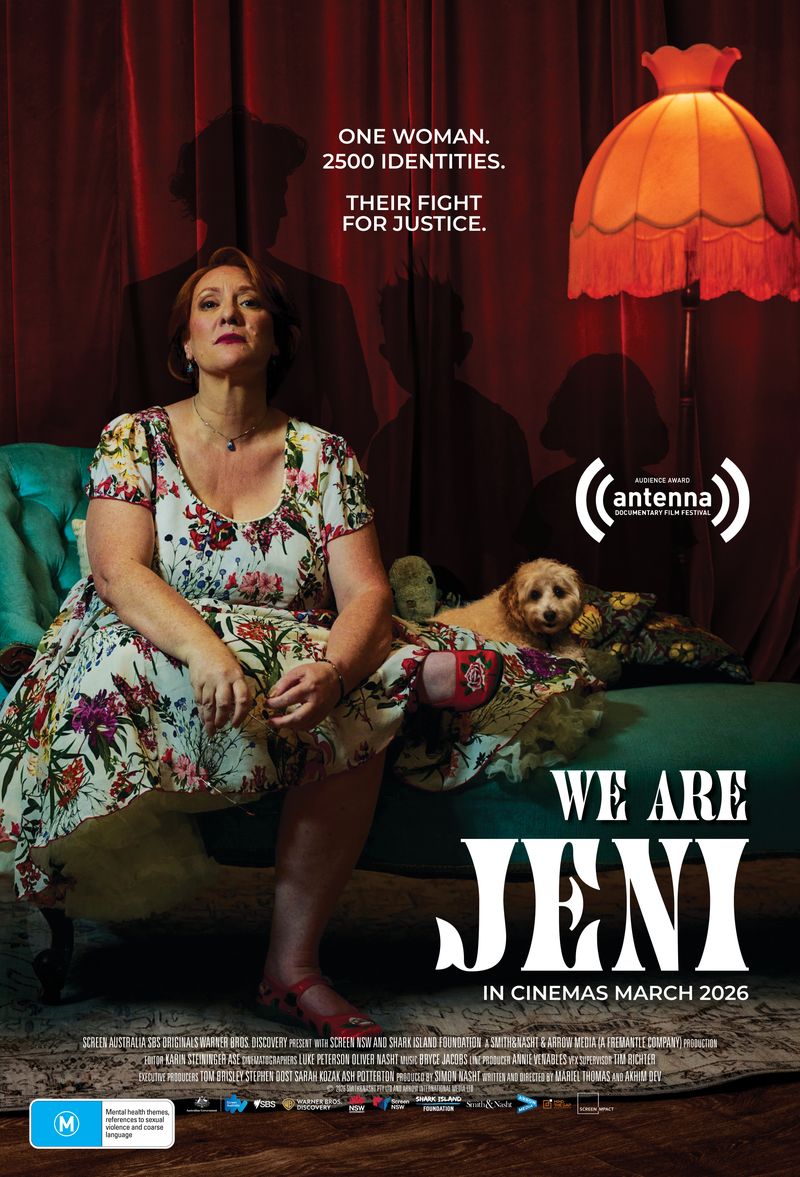
Following sold-out screenings at the Antenna Documentary Film Festival, the acclaimed Australian feature documentary WE ARE JENI will open in cinemas nationally from 15 March. Released in partnership with ten of Australia’s leading child safety and victim/survivor advocacy groups, WE ARE JENI reveals one of the most remarkable criminal cases in Australian history — a case that redefined how the justice system understands trauma.
Directed by Mariel Thomas and Akhim Dev, and produced by Simon Nasht the feature documentary is an inspiring story of survival against the odds. Dr Jeni Haynes’ childhood mind and body became a crime scene. To survive years of unspeakable abuse, her psyche fractured into 2,682 alternate personalities — an “army of alters” who each carried fragments of memory. For decades, she was dismissed as unreliable, delusional, unbelievable. Until one detective listened.
In a world-first legal precedent, Jeni’s alters were permitted to take the stand in an Australian courtroom. Confronted with their testimony, her father changed his plea to guilty and was sentenced to 45 years in prison. WE ARE JENI is both a gripping true-crime investigation and an intimate psychological portrait. Through vivid animation inspired by 1970s pop-up books and fantasy role-playing worlds, audiences are taken inside Jeni’s internal landscape — a labyrinth of tunnels, protectors and child-voices that preserved evidence with photographic clarity.
1. What initially drew you to Dr. Jeni Haynes’ story, and how did the project come together?
Mariel: I read about Jeni’s fathers trial in 2019. The headline, that some of Jeni’s 2000+ alter personalities testified, immediately grabbed me and I thought “that will make a cracker documentary”. A few years later, realising I had not seen a documentary of her story, I reached out to Jeni.
(Akhim) Dev and I have been friends for several years. Dev and (producer) Simon Nasht had previously made a film dealing with child sexual abuse, THE CHILDREN IN THE PICTURES so I knew he understood the delicacy of the subject matter.
Together we worked to determine how best to convey Jeni’s story, that spanned 50 years and featured 1000’s of voices. We always wanted to ensure that the voice/s of Jenii and her alters were at the heart of the film.
Dev: For me the appeal of the film was the unbelievability – is this real? can it be true? – a good dose of film maker skepticism that quickly changed once I got to know Jeni. That first meeting with Jeni will go down in legend. Leaving that meeting we all knew this was a film we had to make.
2. The film describes Jeni’s 2,500+ alters as an “army” that preserved evidence with photographic clarity—how did you approach portraying this internal world without sensationalizing DID, and what research went into ensuring an accurate, respectful depiction?
Our cues came directly from Jeni. She would intricately describe the alters – their looks, characteristics and personality, as well as the world they inhabited. We worked with an animation team to take these descriptions and visually bring them to life. We knew we were on the right track when we showed Jeni and she exclaimed “It’s like you’ve stepped behind my eyeballs!”
A helpful bunch of Napoleonic war enthusiasts supplied the soldiers for Psychiatrist George Blair-West to describe the workings of Jeni’s system.
3. One of the film’s central questions is “What does it take for a person’s experience to be believed?” How did Jeni’s repeated dismissals over decades—and the eventual world-first legal precedent allowing her alters to testify—shape the narrative structure of the documentary?
The question of believability, and Jeni’s long quest to be believed is absolutely central to the film’s narrative.
4. Detective Paul Stamoulis and psychiatrist Dr. George Blair-West played pivotal roles in building the case. What was it like working with them (or incorporating their perspectives), and how did their involvement highlight systemic challenges in the justice system for trauma survivors?
In Jeni’s cosmology men were feared. It was a bold move for Jeni to look at a man, let alone share details of every aspect of her life. Jeni grew to trust these men, and describes them as two shining knights. As filmmakers we knew how much their perspectives mattered to Jeni and also to the film’s narrative. Both could convey the many challenges encountered – the difficulties prosecuting historic sexual abuse cases; the skepticism of Jeni’s condition and how it is regarded in society; convincing others that dissociative identity disorders evidence of a crime; the experience of the justice system for victim survivors.
5. The story includes difficult elements, such as Jeni’s brief period of forgiveness and contact with her father after his initial UK conviction. How did you handle balancing the complexity of survivor experiences, including moments of hope and betrayal, without overshadowing the abuse or justice achieved?
Dramatically ‘letting dad back in’ was a clear point of jeopardy for the film itself, but we knew it needed to be handled carefully. The raw vulnerability of Jeni recalling the period, describing her desire for normalcy and the love of a parent, is contextualised by George. The audience can then appreciate how this is something we can all relate to, whether a survivor or not.
6. This is described as both a gripping true-crime investigation and an intimate psychological portrait. How did you balance those two tones to create a film that’s confronting yet ultimately uplifting and focused on radical resilience?
This was always going to be a delicate balancing act. We did not want to lean on the usual true crime tropes or platform the perpetrator, and wanted to ensure this was Jeni’s story. We approached it almost as a love story – Jeni’s love for her alters, and the remarkable system that saved her.
The decision to use animation was inspired by Jeni, her many and varied hobbies and her cultural touchpoints. Using the 1970s-style child’s pop-up book as a device to recall events from Jeni’s past was intended to soften the horrors that Jeni endured. The animated alters and inner world had elements of the role play games Jeni loves, including Dungeons and Dragons.
7. Partnering with organizations like Blue Knot Foundation, Bravehearts, and others for the release shows a strong emphasis on survivor support. How did these collaborations influence the filmmaking process, including the development of trauma-informed resources available on the Blue Knot site?
It was always our intent to tell Jeni’s story as a note of hope and help for survivors, especially those that may never have their day in court. We know that this crime happens to 1in 4 Australians and that help is there for them if sought. The support of the organisations is testament to their belief that Jeni’s story, shared in the film, can serve to support other victim survivors and inform the broader audience.
8. Dr. Jeni Haynes has become a prominent advocate since the trial. What was your experience collaborating with her directly, and how did her involvement ensure the film remained authentic to her voice and those of her alters?
We would not want to make this film without the authentic voice of Jeni and the alters at the centre of it. From the outset we assured Jeni that this film would be a collaborative one, and an opportunity for her story to be heard. We know that the process has been cathartic for Jeni, and it is our hope that it will also lead to support and healing for others.
9. The case redefined aspects of how the Australian justice system understands trauma and credibility. In what ways do you hope the film contributes to ongoing reforms in policing, judiciary, mental health, and education around DID and childhood sexual abuse?
Big questions, but we hope it revitalises the reporting mechanisms and extends the range of people that children can disclose to.
10. Filming and presenting such sensitive, distressing material requires careful ethical considerations. What protocols did you follow to protect Jeni’s well-being, handle consent with her alters, and support audiences who might be triggered by the content?
As well as extensive conversations with psychiatrist Dr George Blair-West regarding Jeni’s wellbeing we consulted with Jeni’s current psychologist prior to entering production and throughout the filming process. We would ask for consent collectively from the alters, and at various times they would hold an ‘All-In’ meeting before responding to a request.
In terms of support of the audience – We were mindful throughout the filmmaking process of language and descriptions used, and held back on explicit detail. That said, there is no avoiding that the film may be triggering for some. The rating classification references the content, and we hope the audience will come to the film aware of the subject matter. We advise that support services are available, with support resources created by BlueKnot available on the We Are Jeni website (https://www.wearejeni.com/).
11. Now that the film is launching in cinemas with special events featuring Dr. Jeni Haynes, what message do you most want viewers—especially survivors, supporters, or those in the justice/mental health fields—to take away from WE ARE JENI?
That we hear you and we know it’s not an easy road to recovery – but there’s no statute of limitations on receiving love and healing .
- Email: neill@outloudculture.com
- Socials: @frazer.live
- @neill.outloud