


Narciso opens with fire—a charred body that sets the tone for a film haunted by its own ending. Set in late-1950s Asunción, Paraguay, on the cusp of Alfredo Stroessner’s long dictatorship, this atmospheric drama uses the arrival of rock ’n’ roll as both soundtrack and symbol of fragile freedom in a society tightening its grip. Loosely inspired by real events and figures like radio personality Bernardo Aranda, the film is less a straightforward biopic or whodunit than a moody, paranoid portrait of cultural rebellion, hidden desire, and institutional repression.
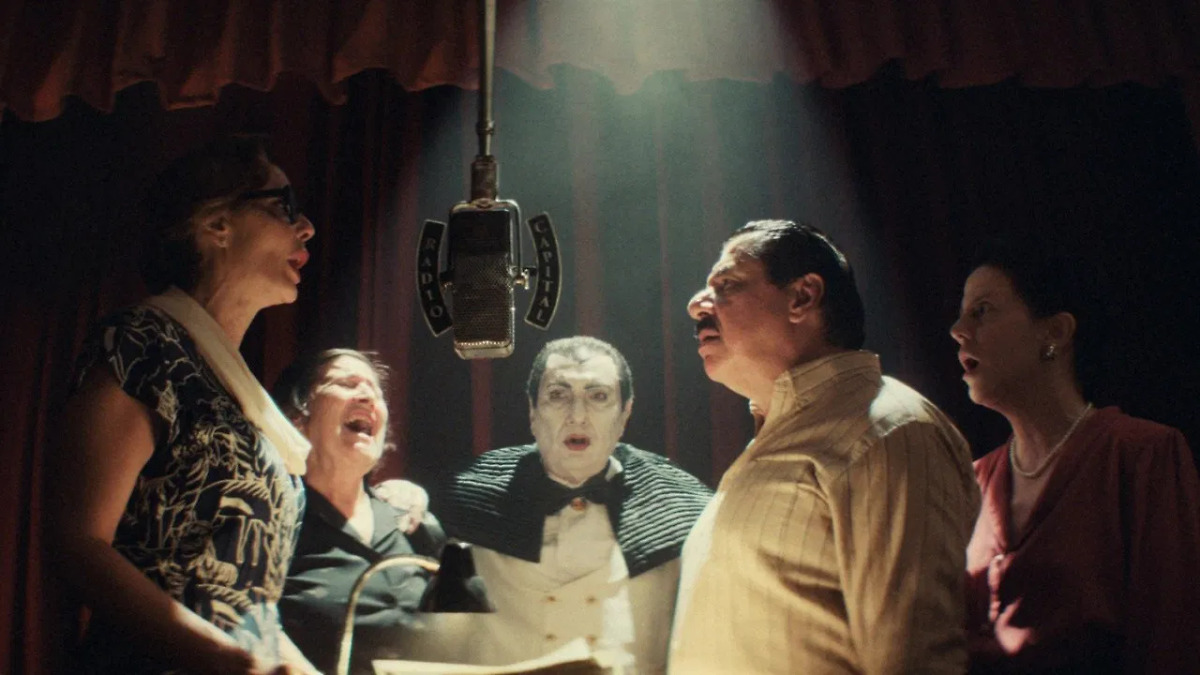
Diro Romero delivers a magnetic, enigmatic performance as the titular Narciso, a young man returning from Buenos Aires with a suitcase of records and an infectious enthusiasm for the new American sounds. He lands at ZP10 Radio Capital, injecting energy into a staid operation run by the outwardly respectable Luis “Lulú” Bermúdez (Manuel Cuenca). Narciso’s broadcasts—blending rock ’n’ roll with charisma—quickly captivate listeners, turning him into a local sensation. Around him, the supporting cast shines: Margarita Irún as the lively on-air personality Goya, and others who populate the radio station as a microcosm of a nation navigating tradition, modernity, and fear.
What makes Narciso compelling is its layered approach. Martinessi weaves queer subtext and longing into the fabric of the story without overt exposition. Narciso becomes a screen for projections—admiration, envy, lust, and suspicion—from those around him, including figures wrestling with their own suppressed identities. The film shows how lively music and youth culture stand in contrast to the growing control of an authoritarian government. It features propaganda, moral fears, and increasing surveillance of people’s bodies and desires. In this story, rock ’n’ roll isn’t just for fun; it’s a form of resistance. The music’s rhythm openly challenges the rules and conformity that the authorities are trying to enforce, which makes them worried.

Some critiques note that Narciso himself remains somewhat elusive, more catalyst and symbol than deeply psychologized protagonist, which can make the personal stakes feel secondary to the broader thematic ones. Certain supporting relationships could use sharper definition.
Narciso is a worthy watch. It’s a film that celebrates the subversive joy of art while mourning its cost—one that leaves you with the echo of rock ’n’ roll fading into an authoritarian hush. Urgent, stylish, and thought-provoking, it’s essential viewing for anyone interested in cinema that confronts how societies police pleasure, identity, and voice.
Screening as part of 2026 HSBC Spanish & Latin American Film Festival

- Email: neill@outloudculture.com
- Socials: @frazer.live
- @neill.outloud





Leave a Reply